
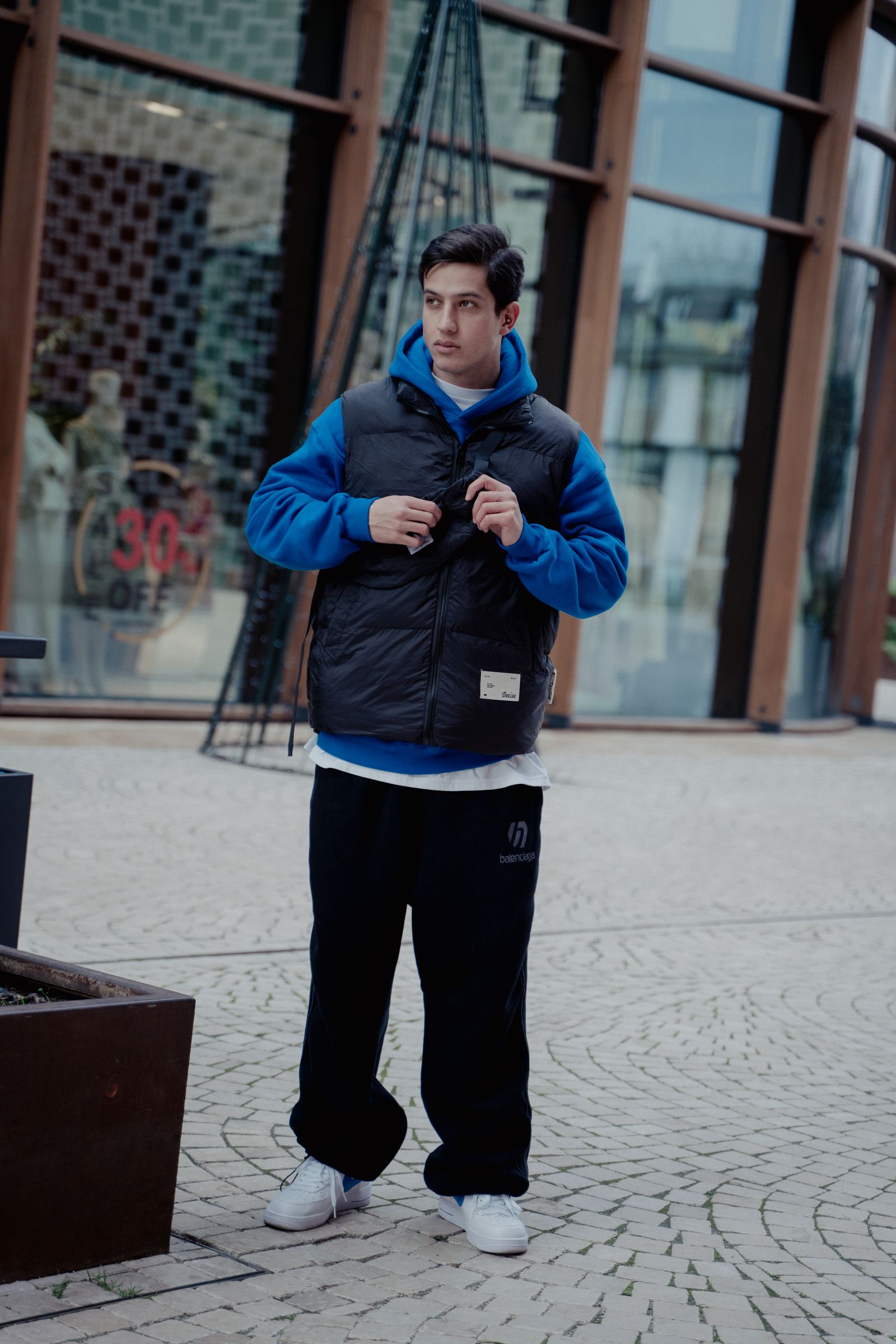
A fit check. A sharp edit. A face you recognise before you remember the name. Image gives us a way into a bigger story about attention, identity, and opportunity.
From the feed to the runway
Clavicular makes that connection visible. His public Linktree brings a looksmaxxing identity together with streaming accounts, social channels, and guides. In February 2026, GQ documented his runway debut for Elena Velez. An online persona had become part of a fashion event. [1] [2]
Our reading is that appearance is one element of the appeal, alongside a recognisable character, an audience, and footage people want to circulate. The interesting question is how those elements work together. A runway appearance shows a specific opportunity; it does not establish a formula that anyone can repeat.
Aesthetic capital is a useful lens here: the possible advantages attached to how someone looks and presents themselves. We are interested in how people develop that presentation, who helps them, and when attention becomes something they can build on.
The first impression is only a beginning
There is research behind the idea that appearance can shape impressions. In a 2006 experiment, Griffin and Langlois found that adults made different judgments about traits such as sociability when shown female faces in different attractiveness conditions. That was a study of judgments from photographs, not proof of someone’s character, ability, or future earnings. [3]
The distinction makes this a more interesting beat. We can take presentation seriously while asking what sustains the attention it brings. Does someone develop a point of view? Make good work? Become a useful collaborator? Build an audience that returns for more than the first impression?
Ambition and style belong in the conversation. Wanting a stronger image can be part of wanting to participate: to put out a first collection, appear on camera, perform, or show people what you can do.
Look at the people around the image
Consider the work behind a creator’s first serious shoot: the friend taking photographs, someone lending clothes, an editor finding the right sequence, a collaborator making the introduction. This is an illustrative scene, but it suggests a reporting direction. An individual image can be a shared project.
That is where our motto becomes practical. People invest time, taste, skill, and sometimes money in someone else’s presentation. We want to follow those contributions and learn what they make possible for everyone involved.
What does the attention become?
A booking, a commission, a membership, a product sale, and a tradable creator coin are different outcomes. Zora, for example, describes its Creator Coins as profile-level tokens. A profile-linked coin does not, by that description alone, give its holder a contractual share of the creator’s future earnings. [4]
Our thesis is that image, relationships, and media can combine to create opportunity. The work is finding concrete examples and following the exchange: who contributes, who gets paid, what the audience receives, and what lasts.
The image is part of the story. The people who help someone turn it into a next step are another part worth seeing.
Sources & reading
- Clavicular: Public creator links Accessed November 14, 2026
- GQ: Inside Clavicular’s Thirsty Tour of New York City February 19, 2026
- Griffin and Langlois: Stereotype Directionality and Attractiveness Stereotyping, Social Cognition April 2006
- Zora: Understanding Creator Coins Updated August 12, 2026
Analysis of the linked sources. Research and drafting assisted by AI; source-checked and edited for this edition. Our approach.

